

From double cleansing to the products your skin actually needs, here's what you might be getting wrong about the most important step in your skincare routine.
You've invested in the serums. You've found your perfect moisturiser. You've even got your SPF routine sorted. But what if the one thing standing between you and better-looking skin is the product you use to wash your face?
From the double-cleansing debate to the truth about that squeaky-clean feeling, we're uncovering seven cleansing mistakes that could be holding your skincare routine back. If you already know which fix you need, you can explore all cleansers at allbeauty now. If not, read on.
The quick version:
- Tight after washing? Switch to something gentler.
- Wear makeup or SPF? Consider a balm or oil first, then a gentle second cleanse.
- Choose a texture for your skin, not for the label.
- Expect your cleanser to need a rethink when the seasons change.
Mistake 1: Thinking squeaky clean means properly clean
That tight, almost squeaky feeling after washing is one many of us were taught to trust. It is better read as a warning. Skin that feels tight, dry or sore straight after cleansing is telling you the formula or your technique is too much for it.
The American Academy of Dermatology advises choosing a "gentle, non-abrasive cleanser", washing with lukewarm water and limiting washing to twice a day and after sweating. A good cleanser should leave your face feeling clean and comfortable, not stripped.
THE GENTLE EVERYDAY OPTION

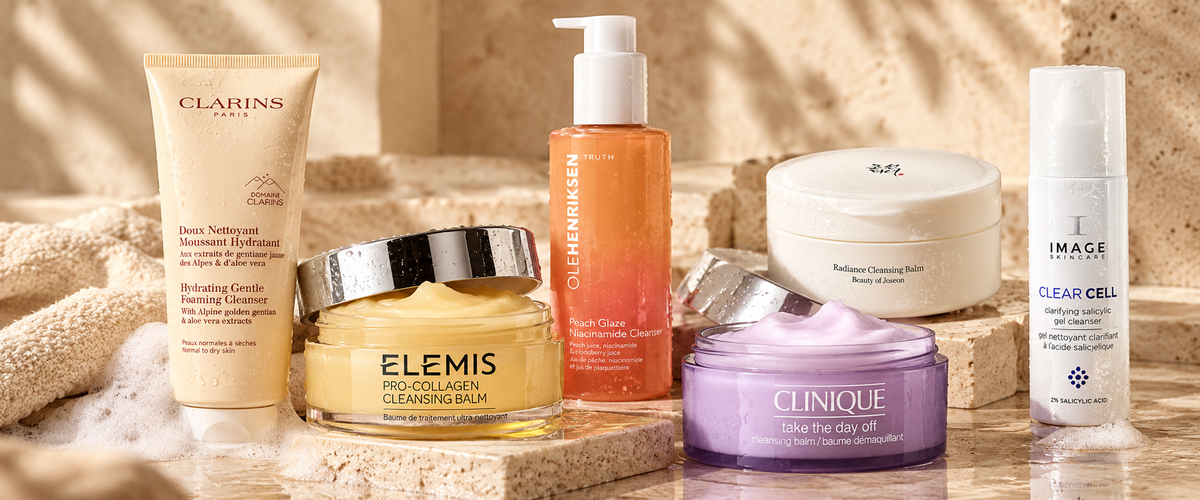
Clarins Hydrating Gentle Foaming Cleanser A cream that turns to a light foam, designed for normal to dry skin and described as soap- and SLS-free. It rinses without that tight feeling, which makes it a sensible swap if your current face wash leaves you uncomfortable.
Discover Clarins at allbeauty →
Mistake 2: Not understanding double cleansing
Double cleansing means cleansing twice in the evening: an oil or balm first to dissolve makeup, sunscreen and the day's build-up, then a water-based cleanser to rinse away what is left. It is useful if you wear long-wear makeup or a daily SPF, because oil-based formulas are built to break down oil-based residue.
Here is the honest bit: not everybody needs it. If you wear no makeup and your SPF washes off easily, one gentle cleanse may be enough. Your skin should be the judge. And if you do double cleanse, the second step should be just as gentle as the first.
How to double cleanse, step by step
- Start with dry hands and a dry face. This is the instruction on the product pages for the balms below.
- Massage a small amount of balm over your face for around a minute, including over makeup and SPF.
- Add a little warm water and keep massaging until it turns milky, then rinse thoroughly.
- Follow with a gentle water-based cleanser: cream, milk or low-foam gel.
- Pat dry, then carry on with the rest of your routine.
Balm or oil? Choose a balm if you like a solid texture that melts on contact. Choose an oil if you prefer a pourable, lightweight texture that glides on and rinses away quickly. Three balms worth knowing, each for a different reason:
THE LUXURY CLEANSING RITUAL

Elemis Pro-Collagen Cleansing Balm Melts on contact into a silky oil and turns to a milk when water is added. Suited to most skin types, it turns the evening cleanse into a small ritual rather than a chore.
Discover Elemis at allbeauty →
THE TRUSTED MAKEUP REMOVER

Clinique Take The Day Off Cleansing Balm A solid balm that melts to a light oil on dry skin to dissolve long-wearing makeup and sunscreen. Fragrance-free with a short ingredient list, and suitable for all skin types including sensitive skin and eyes, according to the product page.
Discover Clinique at allbeauty →
THE AFFORDABLE K-BEAUTY DISCOVERY

Beauty Of Joseon Radiance Cleansing Balm A sherbet-like balm that melts on contact with dry skin, fragrance-free and designed as the first step of a double cleanse. If you have never tried a balm, this is a low-commitment way to find out whether you like the format. The product page advises a patch test first if your skin is sensitive.
Discover Beauty Of Joseon at allbeauty →
Mistake 3: Using the same cleanser regardless of your skin's needs
Gel, cream, milk, oil, balm: the texture matters as much as the brand. A rough guide:
- Gels and foams feel fresh and rinse clean. They tend to suit oilier or blemish-prone skin.
- Creams and milks are softer and tend to suit dry or normal skin.
- Oils and balms are first-cleanse formats, best for makeup and SPF.
- Non-foaming, comforting formulas suit skin that is dry, dehydrated or easily irritated.
Two to try, depending on what you want your cleanser to do:
THE TARGETED SKINCARE SOLUTION

IMAGE Skincare Clear Cell Clarifying Salicylic Gel Cleanser Made for oily and blemish-prone skin, with 2% salicylic acid to gently exfoliate the surface. The product page advises introducing it gradually, cutting back if skin feels dry, and wearing SPF in the daytime. Not one for dry or sensitive skin.
Discover IMAGE Skincare at allbeauty →
THE EVERYDAY GLOW-FOCUSED CLEANSE

Ole Henriksen Peach Glaze Glow Cleanser is a refreshing daily face wash designed to brighten the look of dull, uneven skin while respecting its natural balance.
Discover Ole Henriksen at allbeauty →
Whichever you choose, it is worth matching the formula to the skin you have now, not the skin you had last summer. Which brings us to the next point.
Mistake 4: Forgetting about your skin barrier
Your skin barrier is the outer layer of the skin that helps hold moisture in and keep irritants out. Cleansing is where many of us start to disrupt it. Very harsh or very frequent cleansing can leave skin feeling dry, tight or uncomfortable, which is a sign to simplify.
The practical fix is to look for a cleanser described as gentle, keep to a morning and evening cleanse, use lukewarm water and a light touch (the American Academy of Dermatology advises against scrubbing, which it says irritates skin), and follow with a moisturiser. If your skin is staying red, sore, flaky or itchy, stop using anything new and speak to a pharmacist, GP or dermatologist. This is general beauty advice and not a substitute for medical advice.
Mistake 5: Thinking expensive cleansers are always better
Not necessarily. A premium cleanser can offer a richer texture, a more refined formulation, a nicer experience and a brand you trust. Those are real things to pay for. But a cleanser is rinsed off, so it sits on your skin for a short time, and a sensible, well-chosen formula can do the job. What matters is the right format for your skin and whether you use it consistently.
That is where shopping at allbeauty helps. Recognised brands and new finds sit side by side, and the buying team's picks often make it easier to try the premium option, or a newer discovery, without paying full price. You might want to start with the balm that feels like a treat and the one that is easy on the budget, and see which you actually reach for.
Mistake 6: Forgetting that your skin changes with the seasons
The cleanser that felt perfect in July may not feel right in January. Many people find their skin feels drier in colder months, and central heating can add to that dry, tight feeling. If your skin is more uncomfortable than usual as we head into November, your cleanser is one of the first things to look at.
Some simple adjustments:
- Reassess the lather. If a foaming gel leaves skin feeling tight in winter, try a cream-to-foam, a milk or a balm instead.
- Keep water lukewarm. A hot shower can be tempting on a cold morning, but hot water on your face is best avoided; the American Academy of Dermatology recommends lukewarm water.
- Move the richer texture to the evening. A balm as your first cleanse is a good place for it.
- Rotate. It is perfectly reasonable to keep a fresher gel for warmer months and a gentler, creamier formula for winter.
The Elemis balm and the Clarins foam above are both examples of textures that suit this swap, and you can explore the full cleanser collection to compare formats.
Mistake 7: Treating cleansing as an afterthought
Cleansing is step one of your routine, and it deserves a little more thought than a quick splash. A simple, well-chosen routine might look like this:
Morning: a gentle cleanser, or water if your skin prefers, then moisturiser and SPF. Evening: balm or oil if you wear makeup or SPF, a gentle second cleanse, then the rest of your routine.
Give your cleanser the time it needs, then follow it with the rest of your routine.
Your Best Skin Starts With a Better Cleanse
Whether you're discovering the indulgence of a cleansing balm, looking for something gentler or finally giving double cleansing a go, finding the right cleanser can make your daily skincare routine feel that little bit better.
From cult favourites to exciting new discoveries, explore the cleansing essentials worth making room for in your bathroom cabinet.
Discover Cleansers at allbeauty →
4. FAQS
Do I need to double cleanse? Not always. It is most useful if you wear long-wear makeup or a daily SPF. If you wear neither, one gentle cleanse may be enough.
Should I double cleanse in the morning? Usually not. A gentle cleanser or water is typically enough in the morning, and balms and oils are designed for the evening.
How often should I cleanse my face? The American Academy of Dermatology advises limiting washing to twice a day and after sweating.
What should I use as a second cleanser? A gentle water-based cleanser: cream, milk or low-foam gel, matched to your skin type.
Is a cleansing balm better than a cleansing oil? Neither is better overall. Balms are solid and melt on contact; oils are lightweight and pourable. Choose the texture you prefer.
Why does my skin feel tight after washing? It can mean the cleanser or your technique is too harsh for your skin. Try a gentler formula and lukewarm water. If discomfort, redness or soreness persists, speak to a pharmacist, GP or dermatologist.
Should I change my cleanser in winter? Some people find a gentler, creamier formula suits colder months better. If your current cleanser leaves skin tight, it is worth trying a different texture.


