
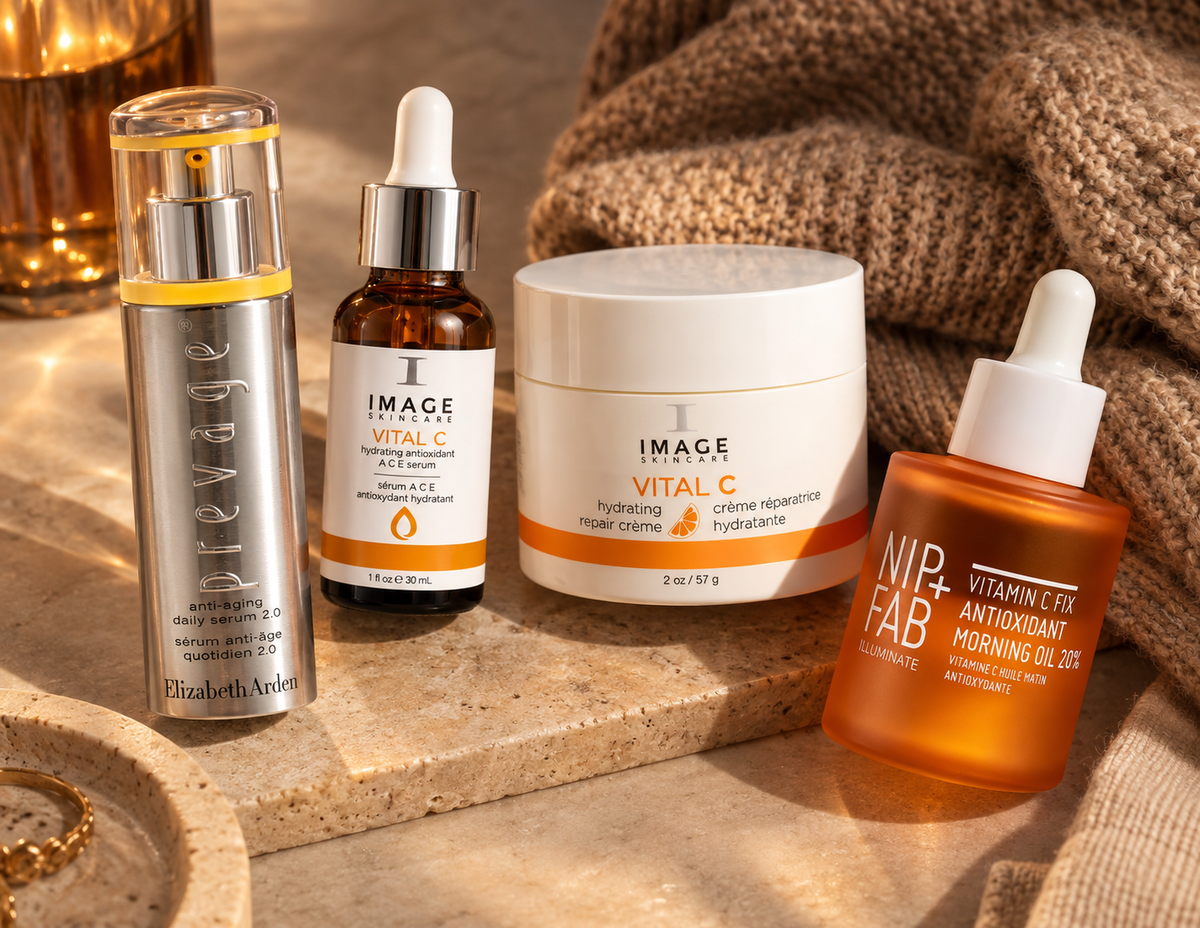

By the time autumn sets in, most people have already put vitamin C away for the year. It's filed under "summer glow" in a lot of minds — something for brighter days, then quietly dropped once the clocks change. That's the wrong way round. The case for vitamin C doesn't get weaker in autumn; if anything, it gets more relevant, and there's a genuinely good reason to add it to your routine now rather than waiting for next spring.
What vitamin C actually does for your skin
Vitamin C is an antioxidant, which means its main job is neutralising the unstable molecules — generated by UV exposure, pollution and general environmental stress — that damage skin over time and contribute to dullness, uneven tone and premature ageing. It's naturally present in citrus fruit, peppers and leafy greens, and the historical link between vitamin C and skin health runs deep: sailors once carried citrus fruit specifically to prevent scurvy, a disease caused by vitamin C deficiency that, among other things, causes connective tissue to break down. Applied topically, it's one of the most consistently recommended ingredients in dermatology, usually mentioned in the same breath as SPF and vitamin A.

Why autumn changes the case for vitamin C
Summer sun exposure doesn't stop affecting your skin the day summer ends. The oxidative damage that builds up over months of UV exposure keeps showing up in dullness, uneven tone and pigmentation well into autumn, which is exactly the kind of damage vitamin C is formulated to help address. At the same time, the switch to central heating and cooler, drier air brings its own stress on the skin barrier — a combination that makes an antioxidant step more useful, not less, as the seasons turn. If you're already restarting other actives for autumn — our guide to restarting retinol this autumn covers that shift in more detail — vitamin C is a natural addition to the same reset, typically in the morning while retinol does its work at night.
What vitamin C is genuinely good for
Protecting against ongoing environmental damage. Your skin doesn't stop encountering pollution, UV and general environmental stress just because summer's over. Vitamin C acts as a shield against this oxidative stress, which is a meaningful part of what causes premature ageing, dullness and uneven tone in the first place. One important caveat: vitamin C is not a substitute for sunscreen. It doesn't block UV rays the way SPF does, so it works alongside your daily SPF, not instead of it.
Supporting collagen production — more precisely than that's usually explained. Vitamin C doesn't build collagen directly. What it does is act as a required cofactor for two enzymes, prolyl and lysyl hydroxylase, that your skin needs in order to build collagen with a stable structure. Without enough vitamin C, that hydroxylation step doesn't happen properly and the resulting collagen is structurally weaker — which is the biochemical reason severe vitamin C deficiency causes connective tissue to break down. Keeping your skin well supplied with vitamin C, whether through diet or topical application, supports the process your skin already runs rather than adding collagen from the outside.
Brightening and addressing uneven tone. If dark spots or an uneven complexion are your main concern, vitamin C is commonly recommended alongside dedicated pigmentation treatments, working on the same underlying causes of discolouration.
Supporting the skin's own repair process. By promoting cell turnover, vitamin C can help with the appearance of acne marks, redness and general texture over time — gradually, not overnight.
Hydrating, depending on the form used. Some derivative forms of vitamin C, such as magnesium ascorbyl phosphate, have hydrating properties in their own right, which is part of why you'll find vitamin C built into cleansers and moisturisers as well as serums.
Who can use vitamin C
Most skin types tolerate vitamin C well, and it's one of the more versatile ingredients to build a routine around. That said, "most" isn't "all" — see the FAQ below on sensitive skin if that's a concern for you.
How to add vitamin C to your routine

Serums — the most concentrated option. A serum delivers the highest dose of vitamin C directly to your skin, and is generally applied in the morning, before moisturiser and SPF.
Elizabeth Arden Prevage Anti-Aging Daily Serum 2.0 is a high-strength daily option aimed at brightening and protecting skin, and it's currently one of the more genuine discounts on allbeauty right now — £81 against a £197 RRP, a 58% saving, not a token markdown. It suits anyone wanting a serious daily antioxidant step and is happy to invest in it.
If you'd rather start at a more accessible price point, IMAGE Skincare Vital C Hydrating Anti-Aging Serum is currently £46.55 against a £105 RRP (55% off) and suits anyone newer to vitamin C who wants a well-regarded formula without the Prevage price tag.
For something positioned at the more clinical end, Obagi Professional-C Serum 15% is currently £94.50 against a £126 RRP (25% off). Obagi Medical formulates its Professional-C range as medical-grade vitamin C skincare, a category more typically encountered through dermatologists and skin clinics than on the average shelf — a reasonable pick for anyone who wants a formula from that more clinical world without needing a referral to access it. Its 15% concentration sits comfortably within the range covered in the FAQ below.
Oils — a lighter alternative to a serum. If a traditional serum feels like one product too many, an antioxidant facial oil can do a similar job in a different texture. Nip + Fab Vitamin C Fix Antioxidant Morning Oil 20% is currently £27.00, built specifically for morning use, and delivers vitamin C in an oil base rather than a water- or gel-based serum. It suits anyone who already likes facial oils or wants a single, simple AM step rather than layering several products.

Moisturisers — for hydration alongside brightening. A vitamin C moisturiser does double duty: brightening tone while sealing in hydration. IMAGE Skincare Vital C Hydrating Repair Crème is currently £53.50 against a £113 RRP (50% off), and pairs naturally with the IMAGE serum above if you want to build the two into the same routine.

Cleansers — the easiest way in. A vitamin C cleanser is a low-effort way to introduce the ingredient without adding a step to your routine. IMAGE Skincare Vital C Hydrating Facial Cleanser is currently £24 against a £40 RRP — a 35% saving that's genuinely live on the site right now, not a "was/now" formality.
Pads — for a quick, no-mess option. Pre-soaked pads are one of the more convenient ways to build vitamin C into a routine, swiped on in seconds rather than requiring a dedicated application step. Medicube Deep Vita C Pads x70 are currently £14.70 against a £21 RRP. Medicube has built a genuinely large following on social platforms including TikTok for products in this style, which suits anyone who wants a quick, repeatable step rather than a multi-stage routine, or who's curious about the K-beauty pad format without committing to a full range.

Building your vitamin C routine at allbeauty
Behind the serum, cream and cleanser above is a buying team whose job is to track down formulas worth stocking, from established dermatological names like Elizabeth Arden to specialist skincare brands like IMAGE, and bring them to you at a genuinely competitive price rather than the full asking rate. It's the same approach across everything allbeauty stocks, so once your vitamin C step is sorted, it's worth seeing what else is waiting for you in skincare.
Explore allbeauty's full Vitamin C range to find the format that suits your routine.
*All prices correct at the time of writing, pricing is subject to change.
FAQs
Can I use vitamin C with retinol or niacinamide? Yes, generally. The old advice to keep them apart came from older, less stable formulations and outdated assumptions about pH — modern versions of both are usually fine to use together. If your skin is sensitive or you're new to actives, a simple way to avoid any overlap is vitamin C in the morning and retinol at night, but there's no need to separate niacinamide from vitamin C in the same way.
Should I use vitamin C in the morning or at night? Morning is the more common recommendation, since it's an antioxidant that works well alongside SPF to help your skin cope with the day's environmental exposure. Using it at night isn't harmful — the more important thing is picking a time you'll actually stick with consistently.
What percentage of vitamin C should I look for? There's no single right number, and it depends on the form of vitamin C as much as the percentage. L-ascorbic acid, the most-researched form, is commonly formulated between roughly 10–20%. Gentler derivatives such as magnesium ascorbyl phosphate or sodium ascorbyl phosphate are usually better tolerated by sensitive skin, at different concentrations. If you're new to vitamin C, starting lower and building up is a reasonable approach.
Is vitamin C safe for sensitive skin? Most people tolerate it well, but L-ascorbic acid specifically can cause stinging or irritation for some, particularly at higher concentrations. If your skin is reactive, look for a gentler derivative form, patch test before applying it to your whole face, and introduce it gradually. This is general skincare guidance rather than medical advice — if you have a diagnosed skin condition, check with a pharmacist or dermatologist before adding anything new.

